The perspective of many Christians regarding the relationship between the Law of Moses and the teaching of Jesus is that of the latter supplanting the former. Perhaps colored by a superficial reading of Paul’s letters, we have come away with the idea that Law is bad, grace is good.
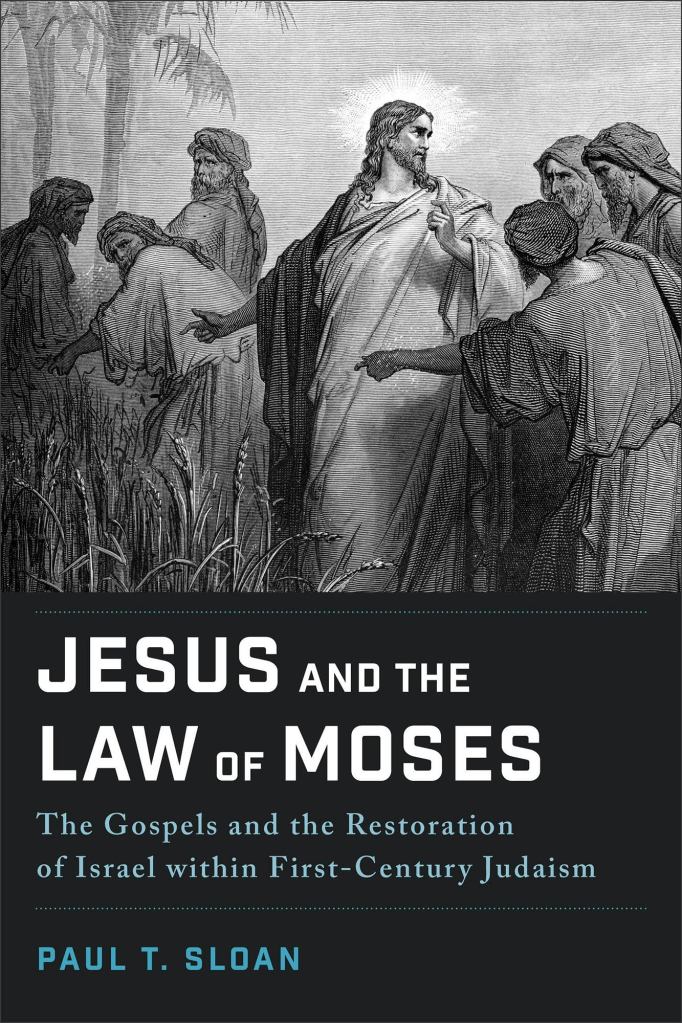
Paul T. Sloan challenges all this in his 2025 book Jesus and the Law of Moses. He shows convincingly that Jesus’ teaching was fully consonant with the Torah (better translated “instruction”) of Moses.
Sloan states that “for centuries, interpretation of the Law in the Gospels has labored under false presuppositions of Jewish legalism, works righteousness, and compassionless nationalism and particularism.”
Of course, we should have known all along that Jesus was not an overthrower of Mosaic teaching. Jesus made that quite clear:
“Do not think that I have come to abolish the Law or the Prophets; I have not come to abolish them but to fulfill them.” (Matthew 5:17)
And when asked what one must do to inherit eternal life, Jesus answered from the Torah:
“You know the commandments: ‘Do not murder, Do not commit adultery, Do not steal, Do not bear false witness, Do not defraud, Honor your father and mother.’” (Mark 10:19)
As part of his argument, Sloan highlights the grace of God that was inherent in the Law with its many instances of atonement, cleansing, forgiveness, and restoration. Additionally, Sloan demonstrates that Jesus’ teaching was consistent with much of the early rabbinic teaching of his day on these issues.
The Law, we learn, was not a burden that the ancient Jews dreaded, (how many times have Evangelicals heard that the Jews labored under the curse of the 613 laws they had to obey?) but rather a covenant that allowed for continual restoration and forgiveness. Sloan shows that ritual impurity was not regarded as sin, but rather a state of uncleanness with clear and ready remedies for restoration. Impurity was not the moral category that the word might suggest to us today.
Sloan sets the whole teaching of Jesus, including his interpretation and application of the Law of Moses, within an eschatological restorationist context, where Jesus’ and his disciples’ mission to preach the gospel might require certain violations of the the Law; but those violations were consistent with other violations of the Law, e.g., the requirement of performing circumcision even on the Sabbath if a baby boy’s eighth day of life fell on the Sabbath.
Personal Reflection
Jesus and the Law of Moses is an eye-opening, paradigm-challenging look at the topic, and a compelling argument for Jesus’ remarkable consistency with Jewish scripture and tradition. The supposed enmity and antipathy, which has sadly fueled supersessionist antisemitism, is not supported by an analysis of Jesus’ teaching in regard to the Law of Moses.
The book is quite scholarly, filled with extensive footnotes—which are worth reading!—and would make a great text for seminarians and Bible teachers looking for a serious treatment of the subject.

